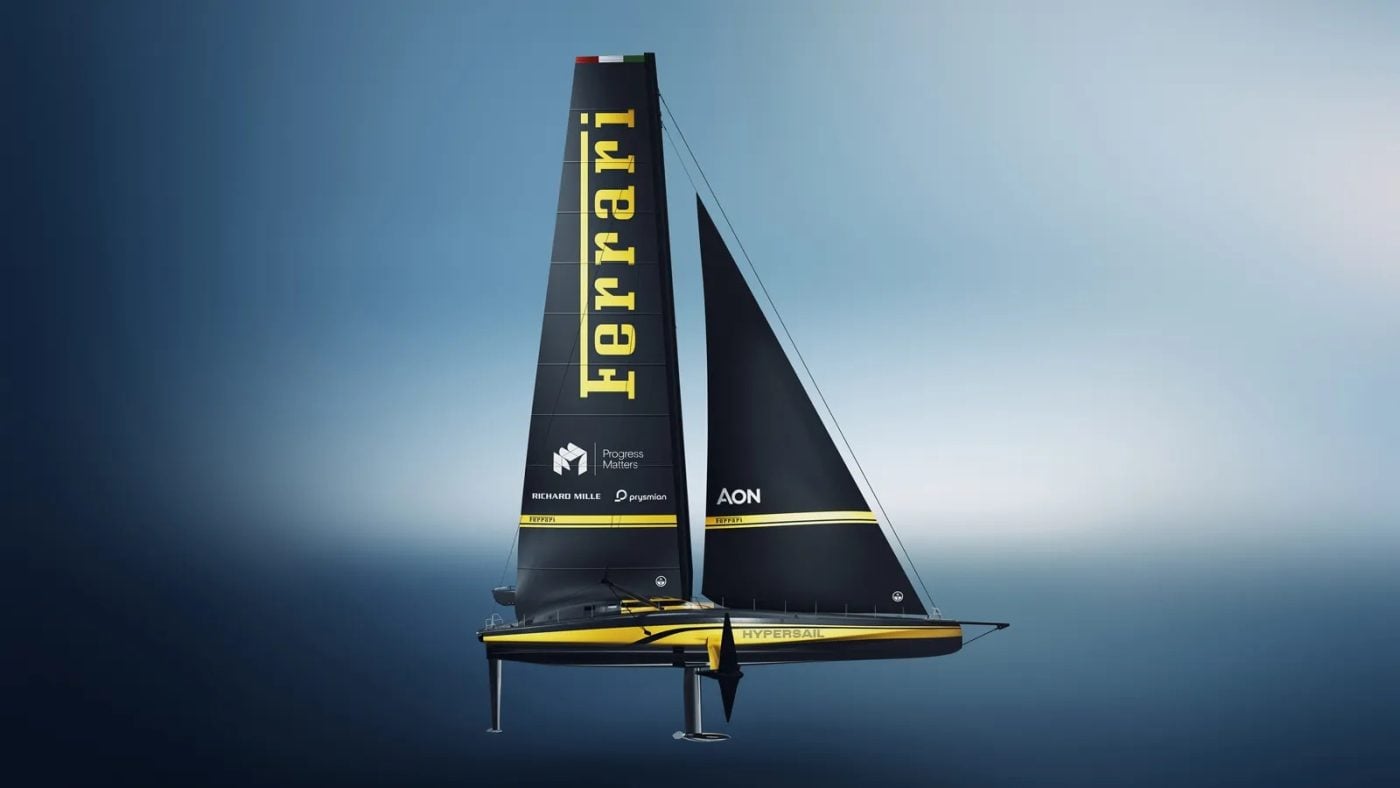
Ferrari has just shared the first proper look at the hull of its 30-metre Hypersail racing yacht, and it already looks like one of the strangest things Maranello has ever put its name on.
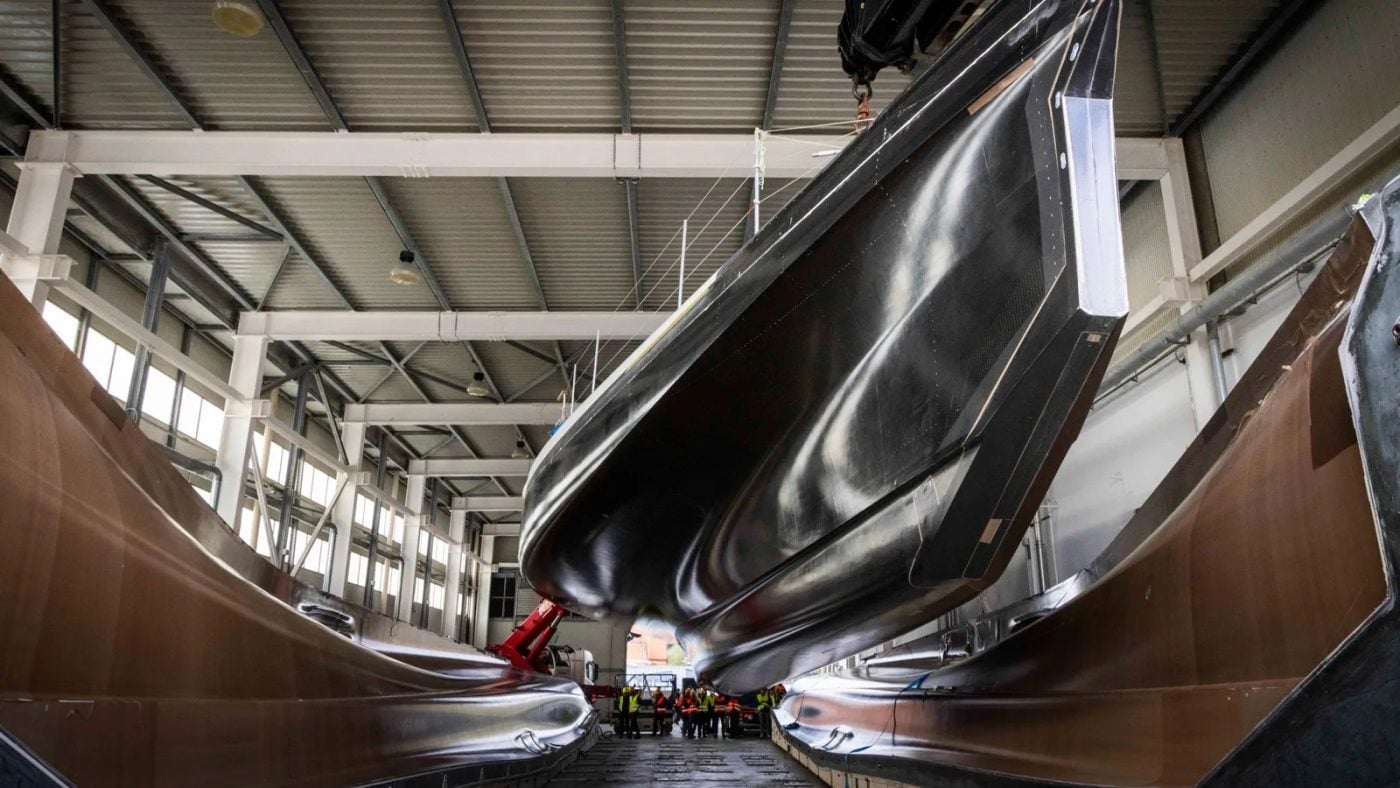
The carbon-heavy foiling monohull has now been removed from its mould in Pisa after more than a year of curing, lamination and internal structure work. That gives the world its first real look at the scale and shape of a project that sounds less like a yacht and more like Ferrari throwing its entire performance brain at the ocean.
This is not a superyacht vanity exercise. Hypersail is being built as a serious offshore racing machine, designed to run without a combustion engine and generate its own energy from wind, solar and motion. The brand famous for screaming V12s and petrol theatre is now trying to build one of the most advanced renewable-powered boats on the planet.
RELATED: LVMH Boss Bernard Arnault Reveals Plans To Acquire Riva Yachts, The ‘Rolls Royce Of The Sea’
Curated news for men,
delivered to your inbox.
Join the DMARGE newsletter — Be the first to receive the latest news and exclusive stories on style, travel, luxury, cars, and watches. Straight to your inbox.
Ferrari Is Taking Its Speed Obsession Offshore
That is what makes Hypersail more interesting than another rich-person toy with a famous badge on the sail. Ferrari wants this thing to fly.
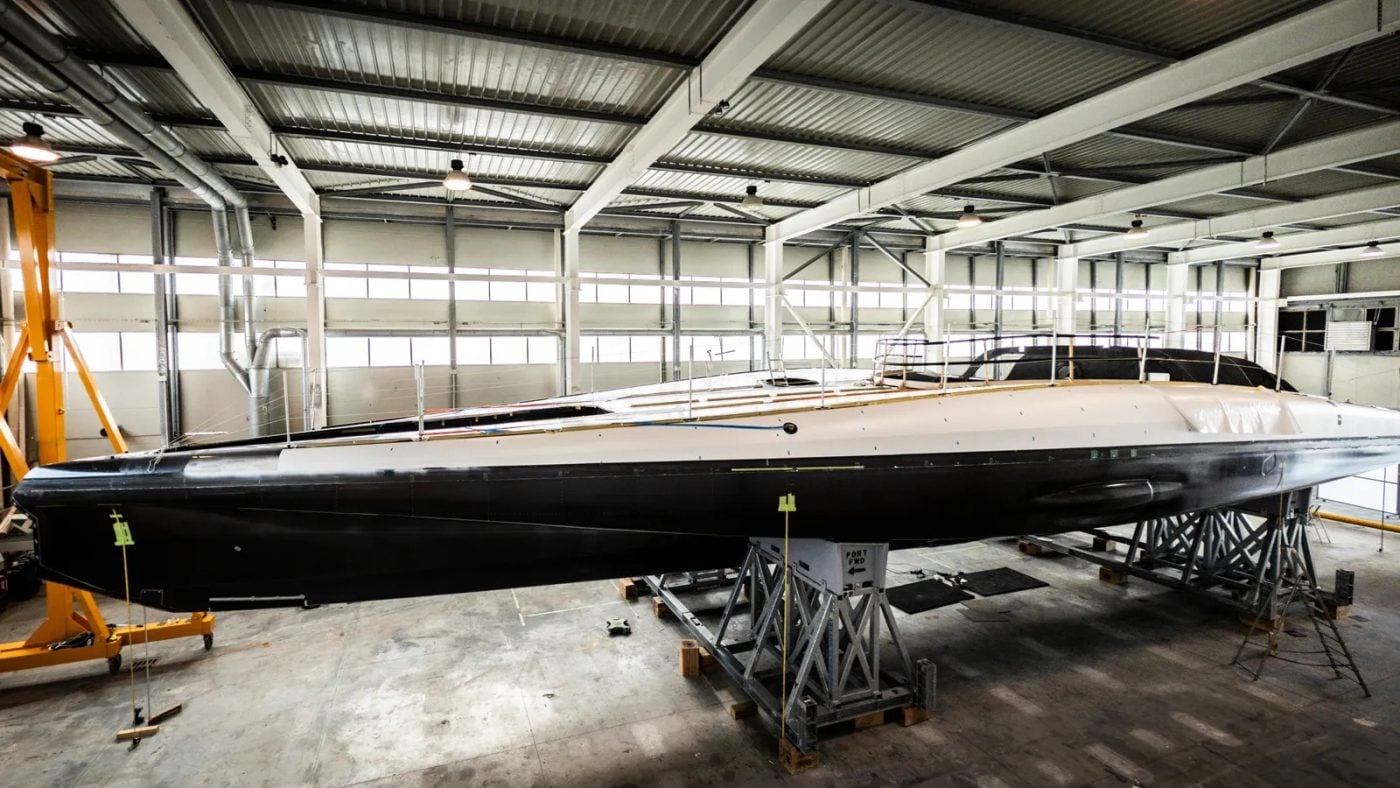
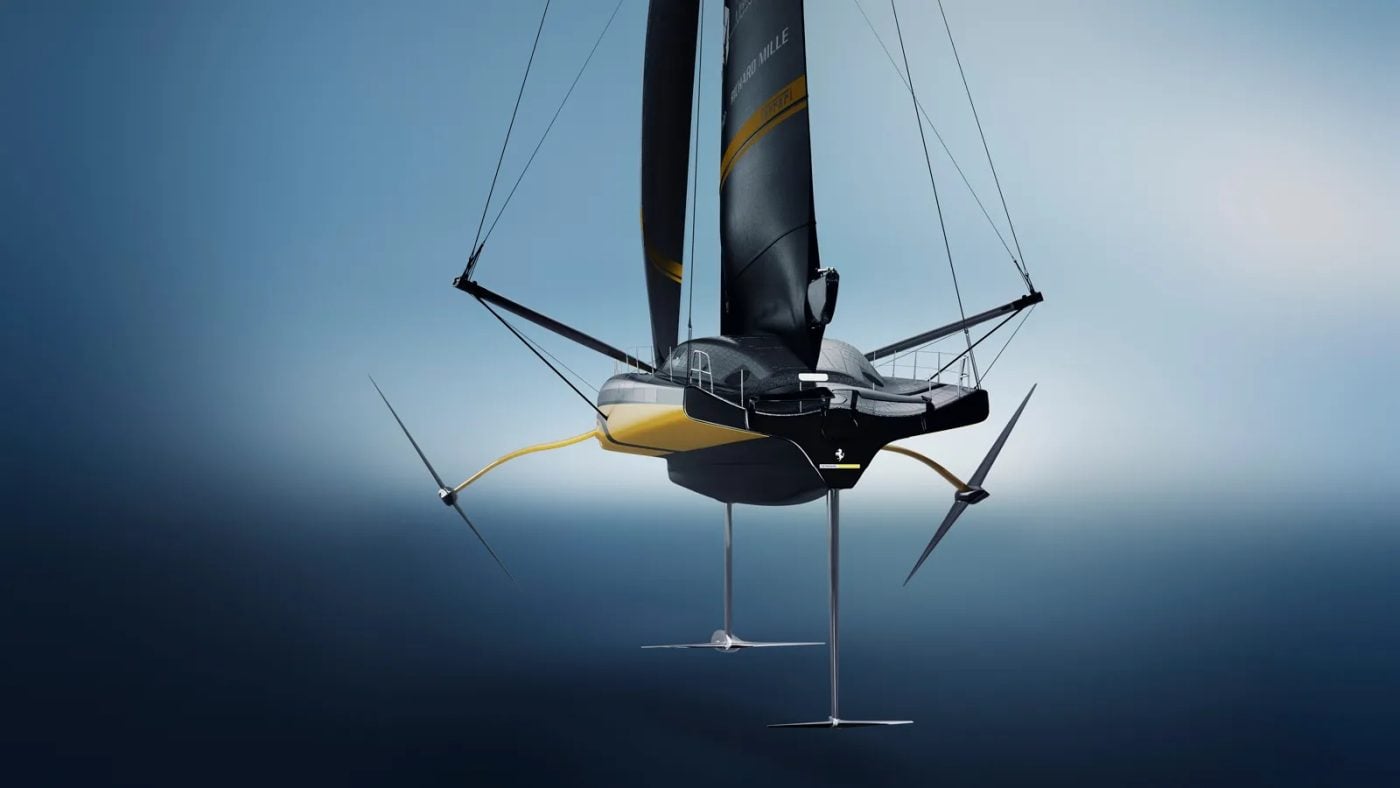
The 30-metre yacht is designed as a foiling monohull, meaning it will lift itself above the water on foils to reduce drag and maintain extreme speed across long ocean passages. In the right conditions, Ferrari believes it could cover more than 1,000 nautical miles in 24 hours, which moves the project into proper record-chasing territory.
The goal is not just a headline speed run either. Hypersail has been linked to the Jules Verne Trophy, the brutal non-stop around-the-world sailing record currently dominated by giant multihulls. Ferrari trying to challenge the world with a monohull is not exactly the modest approach.
The Weirdest Part Is The Most Ferrari Part
There is no combustion engine on board. Every system needed to control the foils, keel, rudder, onboard computers and instruments has to be powered autonomously while under sail.
RELATED: Aston Martin’s Billionaire Owner Lawrence Stroll Acquires Monster Superyacht For F1 Season
That means solar panels integrated into the deck and hull, kinetic energy recovery, wind power and a lot of software doing the kind of work Ferrari usually applies to keeping very expensive cars stable at very high speed. The company is treating Hypersail as a rolling, or rather flying, research lab for energy control, aerodynamics and performance systems.
Even the design keeps one foot in Maranello. The silhouette borrows inspiration from the Ferrari Monza SP1 and SP2, while the coachroof nods to the 499P Hypercar that took Ferrari back to Le Mans glory. The yellow detailing is not random either. Ferrari calls it part of the brand’s “second soul”, tied to Modena and old Ferrari racing history rather than the obvious red everyone expected.
The result is a deeply strange Ferrari. No wheels. No engine roar. No road. Just carbon fibre, foils, renewable energy and a very expensive attempt to prove that the company’s obsession with speed can survive outside the engine bay.
Ferrari may be moving into electric cars, hybrids and now ocean racing, but Hypersail makes one thing clear. Maranello is still chasing the same old feeling. It has just found a much stranger place to do it.

